
Biofeedback Tai Chi (BTC)-Gait Training System (Coming Soon)
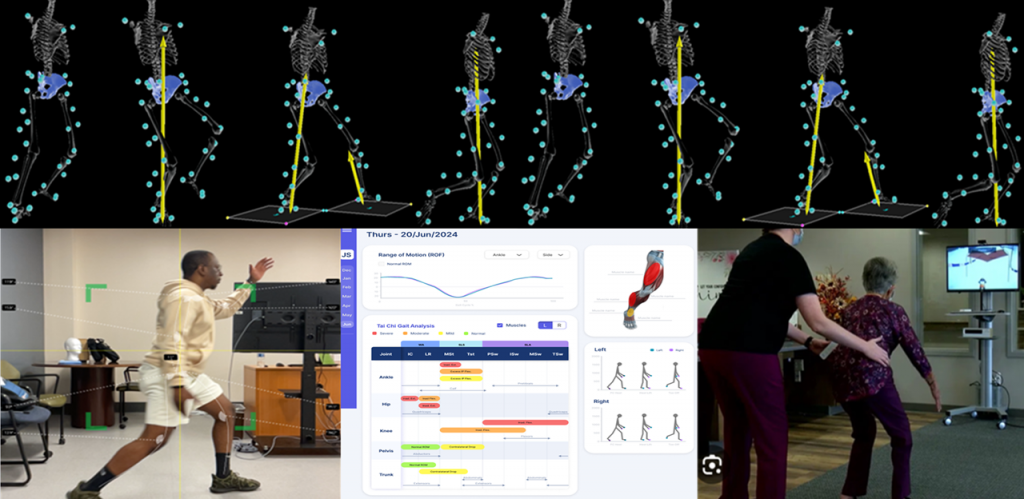
BTC-Gait is a pioneering rehabilitation platform that uniquely leverages ancient Eastern movement wisdom, seamlessly fusing the core principles of Tai Chi with cutting-edge, real-time biofeedback and markerless motion-capture technology.
By analyzing key biomechanical data precisely during movement, the system provides immediate, intuitive sensory cues. These data-driven inputs enable users to optimize their balance, improve gait symmetry, and significantly reduce joint pain. This advanced approach combines historical holistic practice with modern restorative science to improve stability and coordination, reduce fall risk, and restore confidence in daily mobility.
Our Science: Biomechanical Mechanism of the vertical support during Tai Chi Gait (Fall Prevention)
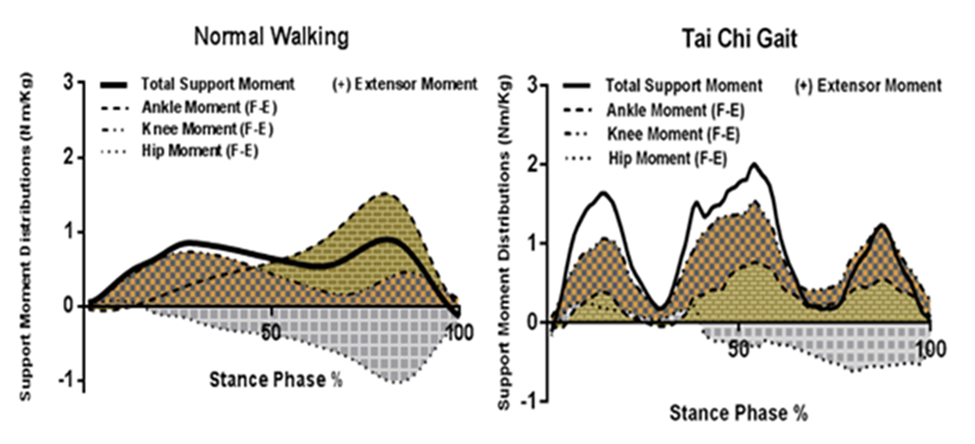
Tai Chi (TC) is a slow, rhythmic movement that demands precise, coordinated control of the ankle, knee, and hip joints. To maintain its continuous flow, the body must effectively manage gravitational demands through lower extremity synergy.
By establishing the first-in-kind causal link between individual joint mechanics and vertical support, we have decoded the underlying “mechanical engine” of this ancient practice.
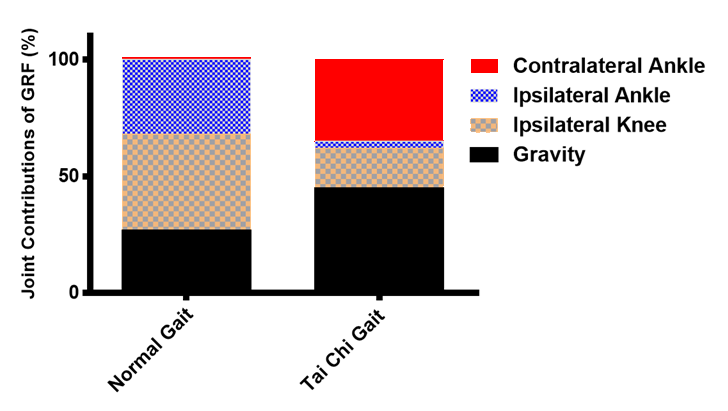
These groundbreaking results offer unprecedented insight into the unique synergy of the ankle, knee, and hip, revealing exactly how Tai Chi optimizes the body’s relationship with gravity. Our findings provide the first mechanical proof of how Tai Chi improves dynamic balance. By optimizing the way the lower extremities coordinate to support the body’s center of mass against gravity. These results empower clinicians to prescribe “Tai Chi Gait” as a scientifically validated method for restoring mobility and building lasting confidence in daily activity.
Our Science: Biomechanical Mechanism of external knee adduction moment (EKAM) during Tai Chi Gait (Chronic Pain Management)
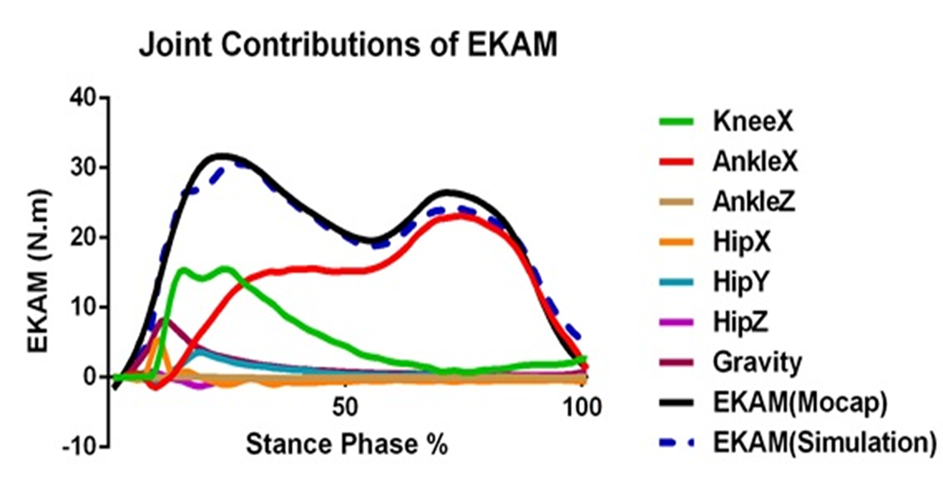
Understanding the causal link between individual joint contributions and the External Knee Adduction Moment (EKAM) provides a revolutionary breakthrough for pain management. By quantifying exactly how the ankle, knee, and hip collectively manage EKAM, we can achieve a true optimization of the Tai Chi gait. This precision allows us to move beyond general practice and specifically modify traditional movements to offload the medial knee compartment. By scientifically refining these mechanics, we transform Tai Chi into a data-driven clinical intervention that minimizes mechanical stress while maximizing the therapeutic impact on joint health and mobility.